
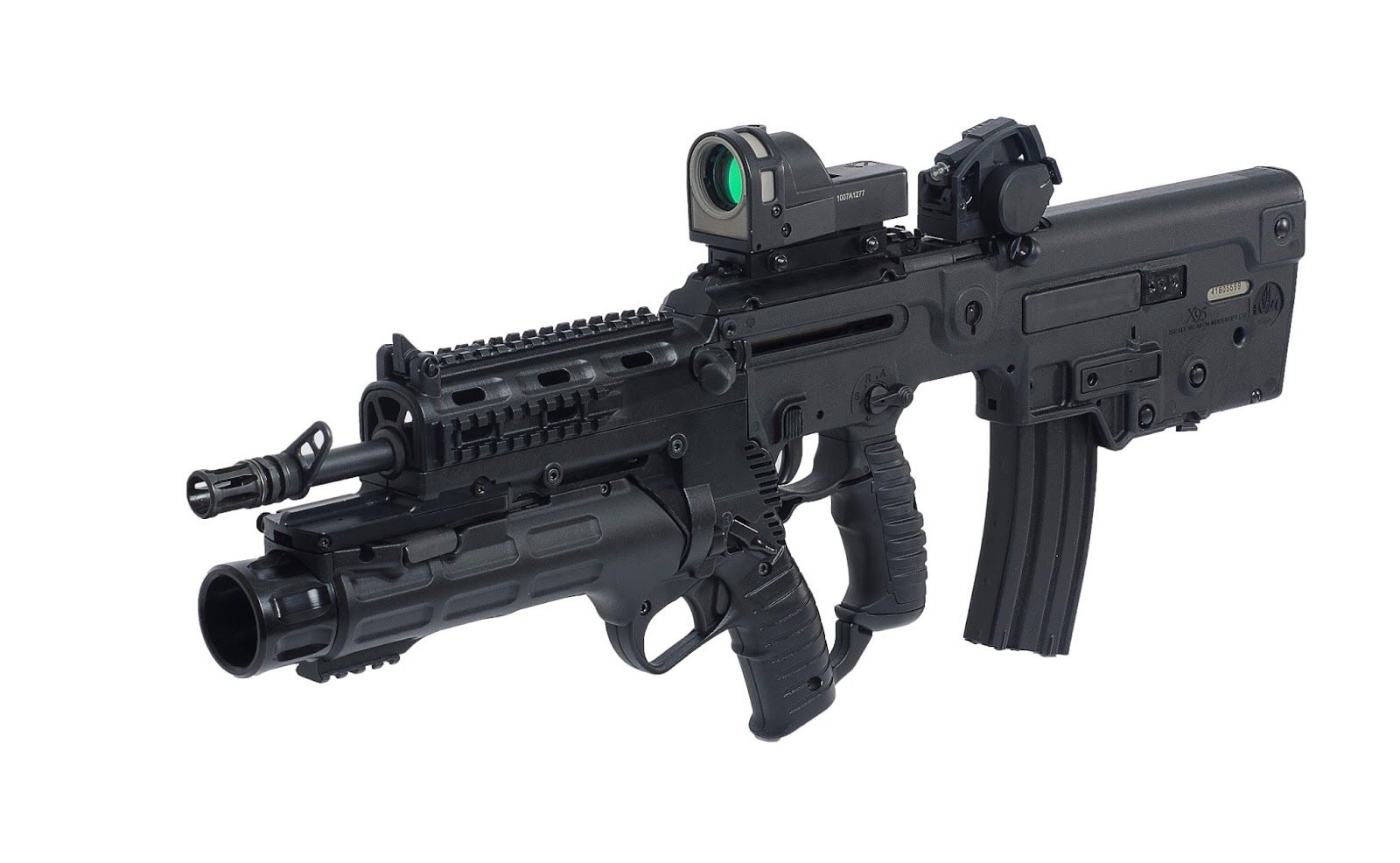
Travor Tar-21(Israel)
Travor Tar-21(Israel), The IMI Galil (Hebrew:) is a family of Israeli-made automatic rifles chambered for the 5.56×45mm NATO and 7.62×51mm NATO cartridges. Originally designed by Yisrael Galili and Yakov Lior in the late 1960s, the Galil was first produced by the state-owned Israel Military Industries and is now exported by the privatized Israel Weapon Industries.
The first Galil rifle was manufactured using RK 62 receivers. Moreover, the Galil design is largely based on the Finnish rifle RK 62 (itself a derivative of the AK-47). The Galil family of weapons is used by both military and police forces across 25 countries.
The Israeli Army initially deployed the 5.56×45mm NATO Galil in three basic configurations; the Automatic Rifle Machine-gun (ARM),[9] the Automatic Rifle (AR), and the Short Automatic Rifle (SAR). A modern version of the Galil currently in production in multiple calibers is known as the Galil ACE
History
The Belgian FN FAL battle rifle had initially been adopted by the Israeli Defense Forces in the late 1950s (chambered for the 7.62×51mm cartridge). The FAL had its limitations, a common complaint being that the abundant local sand and dust exposure would cause weapon malfunction (later attributed to lack of stringent maintenance). Overall, however, the FN FAL was considered long and bulky. Its length and malfunctions became such consistent issues that during the 1973 Yom Kippur War some soldiers began arming themselves with the much smaller Uzi
During the Six-Day War the Israelis captured thousands of primarily Egyptian AK-47’s. This rifle was proven reliable and controllable. The required maintenance was low enough that conscripted troops had less stringent regulations on the weapon’s care.
When the IDF began the process of procuring a new, automatic rifle, the AK-47 was considered, but the difficulty of procurement limited its viability. Hence the IDF specifically sought a weapon that would offer the same benefits as AK-47, such as low maintenance requirements, but would also have the accuracy of the M16 and FN FAL. The would-be standard weapon was originally nicknamed the “Balashnikov”[citation needed]. Several weapons were tendered to the Israeli Army, in response to its specifications for a standard-issue assault rifle. These included the M16A1 and Stoner 63 from the USA, and the HK33 (West Germany).[citation needed] An indigenous design was offered by Uziel Gal, creator of the Uzi submachine gun. This was found complex and unreliable.[11]
The successful design was offered by Yisrael Galil, based on the 7.62×39mm Valmet Rk 62, an AK-47 derivative from Finland. (The first Galils were manufactured with Valmet Rk 62 receivers.)[7] At the time, the US was replacing European countries (especially France) as Israel’s main partner and weapons supplier. Hence, Galil’s rifle was chambered for the US 5.56×45mm round (originally the US M193 55-grain version). Tests conducted from the end of the 1960s to the early 1970s led to Galili’s rifle emerging as the winner. However, issuance of the Galil was delayed by the sudden onset of the Yom Kippur War in 1973.[10][11][12]
The Israeli army first used the 5.56×45mm NATO caliber Galil in three basic configurations:
The Automatic Rifle Machine-gun (ARM) with bi-pod, wire-cutter and carrying handle; would become the standard service rifle issued to front line infantry troops. Also the version that famously features a bottle opener in the front hand-guard.[9]
The Automatic Rifle (AR) with no bi-pod, wire-cutter or carrying handle. Issued to support troops and military police units.
The Short Automatic Rifle (SAR) with shortened barrel. Issued to vehicle crews, army staff and specialty troops.



Reviews
There are no reviews yet.